Respiratory System – Meaning and Organs of Respiratory System | Functions of Respiratory Systems Primary 6 (Basic 6) Term 1 Week 11 Basic Science and Technology
BASIC SCIENCE
BASIC SCIENCE AND TECHNOLOGY
FIRST TERM WEEK 11
PRIMARY 6 (BASIC 6)
THEME – LIVING COMPONENT OF THE ENVIRONMENT
TOPIC: RESPIRATORY SYSTEM
LEARNING AREA
1. Introductory Activities
2. Meaning of Respiratory System
3. Organs of Respiratory System/Respiratory Organs
4. Functions of Respiratory Systems
5. Revision, Lesson Evaluation and Weekly Assessment
PERFORMANCE OBJECTIVES
By the end of the lesson, the pupils should have attained the following objectives (cognitive, affective and psychomotor) and should be able to:
1. explain the meaning of respiratory system.
2. differentiate between respiratory system and respiratory organs.
3. identify and discuss some of respiratory organs.
4. discuss the important functions of respiratory system.
ENTRY BEHAVIOR
The pupils can identify and differentiate between the nose and the mouth.
INSTRUCTIONAL MATERIALS
The teacher will teach the lesson with the aid of chart showing respiratory organs.
METHOD OF TEACHING
Choose a suitable and appropriate methods for the lessons.
Note – Irrespective of choosing methods of teaching, always introduce an activities that will arouse pupil’s interest or lead them to the lessons.
REFERENCE MATERIALS
Scheme of Work
9 – Years Basic Education Curriculum
Basic Science and Technology for Basic 6
Foundation Basic Science and Technology for Basic 6
All Relevant Materials
Online Materials
CONTENT OF THE LESSON
LESSON 1 – INTRODUCTION
Most living things need breathe to survive. This is because our body need oxygen. The fresh air we breathe in through the nose and the mouth, down your windpipe, and into your lungs. The lungs let our body push the used air out of the body when we breathe out. Put your hands on your chest to feel what happens to your lungs and chest when you inhale and exhale. The respiratory system is how we breathe in and how we breathe out.
MEANING OF RESPIRATORY SYSTEM
The respiratory system is the network of organs that enable us breathe in and breathe out. In order words, respiratory system is how we breathe in the oxygen and breathe out the carbon dioxide.
ORGANS OF RESPIRATORY SYSTEM
This is also called respiratory organs. Respiratory organs are the specific parts within our body system that perform the functions of gas exchange.
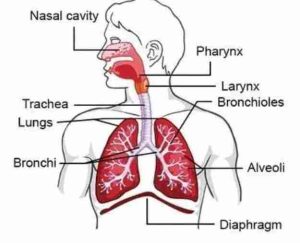 They are made up of the following –
1. Nose – The nose is the major entry points for air.
2. Mouth – The mouth is the alternative point of entry for air.
3. Throat (Pharynx) – The throat is also known as Pharynx. The throat (pharynx) is a passageway for both air and food.
4. Nasal Cavity – The nasal cavity is the internal space of the nose, divided into two passages by the nasal septum. It plays a crucial role in breathing, filtering, warming, and humidifying air before it enters the lungs.
5. Lungs – The lungs are main organs where oxygen come into the blood and carbon dioxide is removed from the blood.
6. Windpipe (Trachea) – The windpipe is also known as trachea. The windpipe (trachea) is tube or pipe that carries air to the lungs.
7. Voice box (larynx) – The voice box (Larynx) is located in the neck, above the trachea (windpipe) and in front of the esophagus (gullet). It plays a vital role in breathing, swallowing, and producing sound.
8. Bronchi – The bronchi are tubes or pipes that branch off from the trachea and lead to the lungs.
9. Bronchioles – The bronchioles are the smaller branches within the lungs.
10. Alveoli – The alveoli is the tiny air sacs in the lungs where oxygen and carbon dioxide are exchanged.
11. Diaphragm – The diaphragm is a muscle below the lungs that helps with breathing.
Their main function is to breathe in oxygen and breathe out carbon dioxide. It also helps protect you from harmful particles and germs and allows you to smell and speak.
HOMEWORK (ASSIGNMENT)
Find out the functions of respiratory system.
LESSON 2 – FUNCTIONS OF RESPIRATORY SYSTEM
The main function of the respiratory system are as follows –
1. Breathing – The main function of the respiratory system is to provide oxygen to the body and remove carbon dioxide.
2. Gas exchange – The espiratory system also makes the exchange of gases between the lungs and blood easier.
3. Protection – The espiratory system helps protect the body from harmful substances in the air.
4. Regulation of pH – The espiratory system regulates the body’s pH balance by controlling the levels of carbon dioxide in the blood.
5. Speech – The espiratory system helps us make sounds like talking and singing.
6. Temperature regulation – The espiratory system helps regulate the body’s temperature by adjusting the amount of air breathed in and out.
7. Smell – The espiratory system involves in the sense of smell, as breathing in air moves molecules past the olfactory nerve.
LESSON 3 – REVISION AND WEEKLY ASSESSMENT
As stated in performance objectives, lesson evaluation and weekly assessment.
PRESENTATION
To deliver the lesson, the teacher adopts the following steps:
1. To introduce the lesson, the teacher revises the previous lesson. Based on this, he/she asks the pupils relevant questions on lesson taught or learn.
2. Teacher organizes the pupils into two or more groups depending on the size of the class.
3. Teacher asks the pupils put your hands on your chest and describe what they feel.
4. Teacher pay attention to the the pupils discussion as he/she actively guides and leads them to the concept of respiratory system.
Pupil’s Activities – The pupils identify and explain the importance of the nose for breathing in oxygen and breathing out carbon dioxide as well as mentioning the mouth as the alternative point of air entry and exit.
5. Teacher uses the pupils relevant responses to the introduction the lesson, guides and leads them on the meaning of respiratory system.
Pupil’s Activities – The pupils listen attentively to the lesson introduction to understand and explain the meaning of respiratory system.
6. Teacher uses chart showing different organs within our body system that perform the functions of gas exchange to explain the functions of each organ in respiratory system.
Pupil’s Activities – The pupils identify, explain and appreciate the important functions of each respiratory organ in their bodies.
7. Teacher guides and leads the pupils to identify and discuss the functions of respiratory system.
Pupil’s Activities – The pupils identify, discuss and appreciate the important functions of respiratory system in their lives.
8. Teacher summarizes the lesson on the board with appropriate evaluation.
Pupil’s Activities – The pupils participate actively in the summary of the lesson by responding correctly to most of the questions write as instructed.
CONCLUSION
To conclude the lesson for the week, the teacher revises the entire lesson and links it to the following week’s lesson – responsible parenthood.
Next Lesson – First Term Examination Basic Science and Technology Primary 6 (Basic 6) Exam Questions
LESSON EVALUATION
Teacher asks the pupils to:
1. explain the meaning of respiratory system.
2. differentiate between respiratory system and respiratory organs.
3. state 5 respiratory organs.
4. discuss 5 functions of respiratory organs.
5. mention 5 important functions of respiratory system.
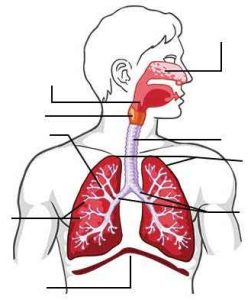
6. Identify and name each of the following organ.
WEEKLY ASSESSMENT TEST
INSTRUCTION – Answer all the questions.
1. Most living things need breathe to _____.
A. survive
B. deαth
C. gas
D. stay
2. Why did living things need breathe to survive?
A. This is because our body need carbon dioxide.
B. This is because our body need carbohydrates.
C. This is because our body need oxygen.
D. This is because our body need protein.
3. _____ is how we breathe in and how we breathe out.
A. Repròduction system
B. Reproductive orgαn
C. Reproductory system
D. Respiratory system
4. The respiratory system is the _____ that enable us breathe in and breathe out.
A. network of organs
B. network of system
C. network of road
D. network of respiratory
5. Respiratory system is how we breathe in _____ and breathe out _____.
A. carbon dioxide and oxygen
B. oxygen and carbon dioxide
C. carbon dioxide and hydrogen
D. oxygen and hydrogen
5. _____ are the specific parts within our body system that perform the functions of gas exchange.
A. Respiratory system
B. Reproduction orgαn
C. Reproductory orgαn
D. Respiratory orgαn
6. The nose is the major entry points for _____.
A. food
B. water
C. air
D. all of the above
7. _____ is the alternative point of entry for air.
A. Nose
B. Mouth
C. Lung
D. Windpipe
8. _____ is also known as Pharynx.
A. Mouth
B. Nose
C. Trachea
D. Throat
9. The pharynx is a passageway for both _____and _____.
A. air and food
B. food and water
C. air and water
D. food and mineral
10. The lungs are main organs where _____ come into the blood and _____ is removed from the blood.
A. carbon dioxide/oxygen
B. oxygen/carbon dioxide
C. carbon dioxide/hydrogen
D. oxygen/hydrogen
11. The tube that carries air to the lungs is called _____.
A. windpipe
B. mouth
C. nose
D. lungs
12. The voice box (Larynx) is located in the neck, above the trachea (windpipe) and in front of the esophagus (gullet).
_____ plays a vital role in breathing, swallowing, and producing sound.
A. Voice box
B. Trachea
C. Larynx
D. All of the above
13. The tubes or pipes that branch off from the trachea and lead to the lungs are known as _____.
A. Bronchi
B. Windpipe
C. Bronchioles
D. None of the above
14. _____ are the smaller branches within the lungs.
A. Bronchi
B. Windpipe
C. Bronchioles
D. None of the above
15. The alveoli is the _____ sacs in the lungs where oxygen and carbon dioxide are exchanged.
A. tiny air
B. thick air
C. wide air
D. All of the above
16. The diaphragm is a _____ below the lungs that helps with breathing.
A. lung
B. vein
C. muscle
D. All of the above
17. The main function of respiratory system is to breathe in carbon dioxide and breathe out oxygen.
A. True
B. False
C. None of the above
D. All of the above
18. Respiratory system helps protect you from harmful particles and germs and allows you to smell and speak.
A. True
B. False
C. None of the above
D. All of the above
19. The main function of the respiratory system is to provide carbon dioxide to the body and remove oxygen. True/False
20. The respiratory system also makes the exchange of gases between the kidney and body easier. True/False
21. The espiratory system helps protect the body from harmful substances in the air. True/False
22. The espiratory system regulates the body’s pH balance by controlling the levels of carbon dioxide in the blood. True/False
23. The espiratory system helps us make sounds like talking and singing. True/False
24. The espiratory system helps regulate the blood pressure by adjusting the amount of air breathed in and out. True/False
25. The espiratory system involves in the sense of smell, as breathing in air moves molecules past the olfactory nerve. True/False

Meaning of Criminal Behaviours | Common Criminal Behaviors | Ways of Avoiding Criminal Behaviours Primary 3 (Basic 3) Term 2 Week 2 Security Education
The Solar System and Gravity and Weightlessness in Space
Mathematics Guides for JSS 3 Basic Operations (Binary Number System)
About The Author

Alabi M. S.
Michael is Principal Education Officer at LASUBEB. With 15+ years experience in teaching and learning, He loves talking about Plan Lesson Notes and Quality Assurance in Education. He also believes teachers inspire our future. CRN (ClassRoomNotes) is a website FOR TEACHERS BY TEACHER, and He aims to continuously inform and encourage teaching! All materials are subject to TERMLY review.