General Personal Safety Rules | Parts of the Body Primary 5 (Basic 5) Term 1 Week 4 Security Education
SECURITY EDUCATION
FIRST TERM
WEEK 4
PRIMARY 5
THEME – PERSONAL SECURITY
PREVIOUS LESSON – Importance of Personal Security | Precaution Tips on Personal Security Primary 5 (Basic 5) Term 1 Week 3 Security Education
TOPIC – PERSONAL SECURITY
LEARNING AREA
1. Introduction
2. Parts of the Body
3. General Safety Rules
4. Lesson Evaluation and Weekly Assessment (Test)
LEARNING OBJECTIVES
By the end of the lesson, the pupils should be able to,
1. explain the meaning of safety.
2. identify and state the functions of each part of the body.
3. different the different between public and private parts of body.
4. identify parts of their body not to be touched by stranger or people.
5. discuss the importance of knowing their names, home address and parent’s phone number.
6. state general safety tips
ENTRY BEHAVIOUR
The pupils understand basic general security tips.
INSTRUCTIONAL MATERIALS
The teacher will teach the lesson with the aid of chart showing name, home address, parent name and phone, family and friends, etc.
METHOD OF TEACHING
Choose a suitable and appropriate methods for the lessons.
Note – Irrespective of choosing methods of teaching, always introduce an activities that will arouse pupil’s interest or lead them to the lessons.
REFERENCE MATERIALS
1. Scheme of Work
2. 9 – Years Basic Education Curriculum
3. Course Book
4. All Relevant Material
5. Online Information
CONTENT OF THE LESSON
LESSON 1 – INTRODUCTION
The human body is full of wonders! Commonly known as parts of the body, parts of our body or parts of human body. The human body has many parts. Every part of our body has its own name and function such as,
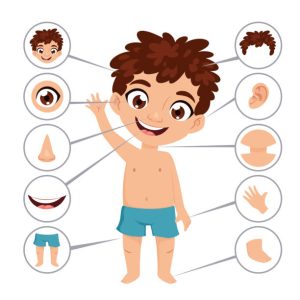
Head – The head includes the hair, eyes, ears, nose, mouth, and teeth.
Neck – The neck is located below the head and above the shoulders.
Arms – The arms are located on either side of the torso.
Hands – The hands are located at the end of the arm, connected to the wrist.
Legs – The legs are located below the torso and above the foot.
Feet – The feet are located at the bottom of the leg.
Internal Organs – The internal organs include the brain, heart, lungs, stomach, kidneys, intestines, liver, pancreas, and glands.
Bones – The bones give the body shape and support.
Muscles – The muscles help with movement, talking, and breathing.
Skin – The skin protects the body from the sun and holds body parts in place.
PARTS OF THE BODY
The parts of the body can be classified as public and private parts of the body. Public and private parts of the body are different for male and female.
1. PUBLIC PARTS OF THE BODY
The public parts of the body refer to the areas that are generally visible or accessible to others, such as the face, arms, legs, hands, and feet. These are considered acceptable to be shown in public and do not typically require clothing to cover them. The private parts of the body refer to the more intimate or sensitive areas that are typically covered by clothing, such as the genitals and buttocks. These areas are considered private and are not typically shown in public settings. Privacy and modesty are generally observed when it comes to these parts of the body.
2. PRIVATE PARTS OF THE BODY
The private parts of the body, also known as genitalia or reproductive organs, are the parts of the body that are involved in sexual reproduction and excretion. These parts are considered private and intimate and are typically covered by clothing.
For males, the private parts include –
1. Pen¡s – The male reproductive organ responsible for delivering spérm.
2. TesticΙe – Produce spérm and the male séx hormone testοsterone.
3. Scrοtum – The pouch of skin that houses the testicΙe.
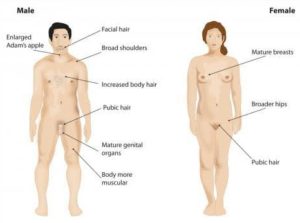
For females, the private parts of this body are –
1. The Bréasts – Breast are part of the chest. They grow during puberty. They can be different sizes and shapes.
2. The Nipplés – Nipples are on chest or breast. Nipplés can be different sizes and colours.
3. The vulvα – Vulvα is the part of the body between legs. Sometimes people call the vulva the vαginα. But the vagina is on the inside of the body.
4. The Vαginα – Vαginα is a tube that goes from the uterus inside the body, to outside the body. The vαginα is made of muscle and is stretchy.
5. The Bottom – Bottom is sometime called are bum, butt, or backside.
6. The Αnus – Αnus is a small hole in your bottom. Poo comes out of the αnus.
It is important to understand and respect the privacy and sensitivity of our body parts. Proper hygiene and care are essential to maintain overall health and prevent infections in the génital area. Additionally, understanding consent, boundaries, and communication in intimate situations is crucial for maintaining healthy relationships and personal well-being.
Recommendation – Teacher should divide the class into male and female groups. For free flow of communication, male teacher should take male’s group if you a female teacher and vice versa to avoid shyness. Don’t use a nickname, say it the way it is.
LESSON 2 – GENERAL SAFETY TIPS
Safety is anything that people do to protect themselves or others from harm or danger. People can protect themselves from harm and danger by following the simple safety tips. Knowing when there is danger or how you can get hurt, taking steps to keep yourself away from it is known as safety tips. Some of the general safety tips are as follows –
1. Knowing your name, home address and parent phone number.
2. Do not share address and phone details with anyone except emergency situations.
3. Do not eat anything given to you by a stranger.
4. Never go anywhere with a stranger.
5. No one is allowed to touch your body.
6. Do not climb the fence.
7. Do not walk alone.
8. If you get lost, get help from security other around you.
9. Do not play with fire, electrical appliances and sharp objects.
10. If you are not comfortable to do anything, don’t dot it. For examples – taking off your clothes, diving in a swimming pool or taking harmful substances such as alcohol, Indian herm, etc.
LESSON 3 – REVISION, LESSON EVALUATION AND WEEKLY ASSESSMENT
As stated in performance objectives or lesson evaluation.
PRESENTATION
To deliver the lesson, the teacher adopts the following steps:
1. To introduce the lesson, the teacher revises the previous lesson. Based on this, he/she asks the pupils some questions.
2. Teacher organizes the pupils in groups or pair depending on the size of the class.
3. Teacher displays chart showing a part of the body, asks the pupils to identify and state the functions of each parts.
4. Teacher actively participates in the class discussions by giving them clues where necessary.
Pupil’s Activities – The pupils identity and discuss the functions of parts of the body.
5. Teacher uses the chart and pupil’s relevant responses to introduce the lesson and leads class discussion on parts of the body and how to set a boundary or limit.
Pupil’s Activities – The pupils pay attention to the lesson introduction and participate actively in the class discussions.
7. Teacher displays a chart showing a form such as Name (in full) ______, Home Address ______ and Phone Number ______ to be filled by the pupils.
Pupil’s Activities – The pupils fill the form with their names in full, home address and phone number.
8. Teacher explains the importance of their names, knowing their home address and their parents, brothers/sisters or any family and friends phone number.
Pupil’s Activities – The pupils listen attentively to the explanation on the importance of name, address and phone number for their own safety.
9. Teacher leads a class discussion on safety and how to keep themselves safe at all time.
Pupil’s Activities – The pupils participate actively in the class discussion and appreciate the importance of safety tips in their lives.
10. Teacher summarizes the lesson on the board with appropriate evaluation.
Pupil’s Activities – The pupils participate actively in the summary of the lesson by responding correctly to most of the questions write as instructed.
CONCLUSION
To conclude the lesson for the week, the teacher revises the entire lesson and links it to the following week’s lesson.
NEXT LESSON
LESSON EVALUATION
Teacher asks pupils to,
1. explain the meaning of safety.
2. differentiate between public and private parts of the body.
3. identify and discuss 3 parts of their body not to be touched by stranger or people.
2. state 3 reasons to know their names, home address and parent’s phone number.
3. mention 5 general safaty tips.
WEEKLY ASSESSMENT
INSTRUCTION – Answer all the questions.
SECTION A – Choose the correct answer from the options A – C.
1. ______ includes the hair, eyes, ears, nose, mouth, and teeth.
A. The head
B. The legs
C. The body
2. ______ is located below the head and above the shoulders.
A. The eye
B. The head
C. The nose
3. ______ are located on either side of the torso.
A. The arms
B. The hands
C. The ears
4. ______ are located at the end of the arm, connected to the wrist.
A. The arms
B. The hands
C. The ears
5. ______ are located below the torso and above the foot.
A. The feet
B. The hands
C. The legs
6. ______ are located at the bottom of the leg.
A. The feet
B. The hands
C. The legs
7. ______ include the brain, heart, lungs, stomach, kidneys, intestines, liver, pancreas, and glands.
A. The external organs
B. The internal organs
C. The central organs
8. ______ give the body shape and support.
A. The skin
B. The bones
B. The muscles
9. ______ help with movement, talking, and breathing.
A. The skin
B. The bones
B. The muscles
10. ______ protects the body from the sun and holds body parts in place.
A. The skin
B. The bones
B. The muscles
SECTION B – Fill in the gas.
11. The male reproductive organ responsible for delivering ______.
12. ______ produce spérm and the male séx hormone testοsterone.
13. ______ is the pouch of skin that houses the testicΙe.
14. ______ are part of the chest. They grow during puberty. They can be different sizes and shapes.
15. ______ are on chest or breast.
16. Nipplés can be different ______ and ______.
17. ______ is the part of the body between legs.
18. Sometimes people call the ______ the vαginα.
19. ______ is on the inside of the body.
SECTION C – True/False
20. Vαginα is a tube that goes from the uterus inside the body, to outside the body. True/False
21. The vαginα is made of muscle and is stretchy. True/False
22. Bottom is sometime called are bum, butt, or frontside. True/False
23. Αnus is a big hole in your bottom. Poo comes out of the αnus. True/False
24. The private parts of the body, also known as genitalia or reproductive organs, are the parts of the body that are involved in sexual reproduction and excretion. True/False
35. Private parts are considered private and intimate and are typically covered by clothing. True/False
Meaning of Drug Abuse and Types of Drug Abuse (Primary 2)

Third Term Examination Civic Education Primary 1 (Basic 1) – Exam Questions
Third Term Examination Civic Education Primary 4 (Basic 4) – Exam Questions Volume 1 and 2
About The Author

Alabi M. S.
Michael is Principal Education Officer at LASUBEB. With 15+ years experience in teaching and learning, He loves talking about Plan Lesson Notes and Quality Assurance in Education. He also believes teachers inspire our future. CRN (ClassRoomNotes) is a website FOR TEACHERS BY TEACHER, and He aims to continuously inform and encourage teaching! All materials are subject to TERMLY review.