Reproduction in Plants: Meaning, Parts of Flowers and Flower Parts That Produce Fruits Primary 5 (Basic 5) First Term Week 11 Basic Science and Technology
REPRODUCTION IN PLANTS: MEANING, EXAMPLES AND PARTS OF FLOWERS AND PARTS OF FLOWERS THAT PRODUCE FRUITS PRIMARY 5 (BASIC 5) FIRST TERM WEEK 11 BASIC SCIENCE AND TECHNOLOGY
BASIC SCIENCE AND TECHNOLOGY
FIRST TERM
WEEK 11
PRIMARY 5 (BASIC 5)
THEME – LEARNING ABOUT OUR ENVIRONMENT
TOPIC – REPRODUCTION IN PLANTS I
LEARNING AREA
1. Introduction
2. Meaning of Reproduction in Plants
3. Parts of a Flower
4. Parts of Flowers that Produces Fruits
5. Weekly Assessment: Test Questions and Answers
6. Summary
LEARNING OBJECTIVES
By the end of the lesson, pupils should be able to:
1. Explain the meaning of reproduction in plants.
2. Identify the parts of a flower.
3. State the parts of a flower that produce fruits.
4. Appreciate the importance of flowers in plant reproduction.
ENTRY BEHAVIOUR
Pupils have previously learned about plants and their importance in the environment, as well as how flowers are involved in plant reproduction.
This lesson builds on that knowledge by helping pupils understand how plants reproduce through flowers, the different parts of a flower, and the specific flower parts that develop into fruits and seeds.
INSTRUCTIONAL MATERIALS
The teacher will teach the lesson with the aid of:
1. Real flowers (e.g., hibiscus, lily)
2. Diagrams of a flower
3. Charts showing parts of a flower
4. Blackboard/whiteboard
5. Flashcards
METHOD OF TEACHING
Choose a suitable and appropriate methods for the lessons.
Note – Irrespective of choosing methods of teaching, always introduce an activities that will arouse pupil’s interest or lead them to the lessons.
REFERENCE MATERIALS
1. Scheme of Work
2. 9 – Years Basic Education Curriculum
3. Course Book
4. All Relevant Material
5. Online Information
CONTENT OF THE LESSON
INTRODUCTION
Plants are living things found all around us. They grow, produce flowers, and make new plants. This process helps plants continue to exist in nature.
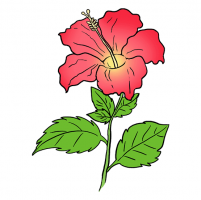
Flowers are very important parts of plants because they help in the production of seeds and fruits. Some flowers produce the seeds that can become new plants while some flowers don’t.
In this lesson, pupils will learn about the meaning of reproduction in plants, the parts of a flower, and the parts of flowers that produce fruits.
MEANING OF REPRODUCTION IN PLANTS
Reproduction in plants is the process by which plants produce new plants (offspring) from seeds.
PARTS OF A FLOWER
1. Petals – Petals are the colourful parts of a flower. They attract insects like bees and butterflies for pollination.
2. Sepals – Sepals are the green parts found at the base of the flower. They protect the flower when it is still in the bud stage.
3. Stamen (Male Part of Flower) – The stamen is the male part of the flower.
It has two parts:
- Anther: Produces pollen grains.
- Filament: Holds the anther in position.
The stamen produces pollen needed for reproduction.
4. Pistil (Carpel) – Female Part of Flower
The pistil is the female part of the flower. It has three parts:
- Stigma: Receives pollen grains.
- Style: Connects the stigma to the ovary.
- Ovary: Contains ovules and develops into fruit after fertilization.
The pistil helps in seed and fruit formation.
Each part of the flower has an important role in reproduction. The stamen produces pollen, while the pistil receives pollen and helps in the formation of seeds and fruits.
PARTS OF FLOWERS THAT PRODUCE FRUITS
The ovary is the part of the flower that develops into a fruit after fertilization.
The ovules inside the ovary develop into seeds.
WEEK ASSESSMENT: TEST QUESTIONS AND ANSWERS
A. Answer the Questions
1. What is reproduction in plants?
2. Mention five parts of a flower.
3. What is the function of petals?
4. Name the part of the flower that produces fruit.
5. What do ovules develop into?
B. Fill in the Blanks
6. Reproduction in plants is the production of new ______.
8. The ______ is the colourful part of a flower.
8. The stamen is made up of anther and ______.
9. The ovary develops into a ______.
10. Ovules develop into ______.
C. True or False
11. Flowers help in plant reproduction. ______
12. The ovary develops into seeds. ______
13. Sepals protect the flower bud. ______
14. Leaves are parts of a flower. ______
15. Plants can reproduce through flowers. ______
D. Match the Following
16. Petals → A. Develop into seeds
17. Ovary → B. Male part of flower
18. Ovules → C. Produces new plants
19. Stamen → D. Develops into fruit
20. Flower → E. Attracts insects
ANSWER KEYS
1. Reproduction in plants is the process of producing new plants.
2. Petals, sepals, stamen, pistil (any five parts).
3. Petals attract insects.
4. Ovary
5. Seeds
6. plants
7. petal
8. filament
9. fruit
10. seeds
11. True
12. False
13. True
14. False
15. 1True
16. E. Attracts insects
17. D. Develops into fruit
18. A. Develop into seeds
19. B. Male part of flower
20. C. Produces new plants
SUMMARY
In this lesson, pupils learned that reproduction in plants is the process by which plants produce new plants (offspring) through seeds.
They also learned the parts of a flower, which include:
- Petals
- Sepals
- Stamen (anther and filament)
- Pistil/Carpel (stigma, style, and ovary)
Pupils further learned that the ovary is the part of the flower that develops into a fruit, while the ovules inside the ovary develop into seeds after fertilization.
Finally, pupils understood that flowers are very important because they help plants to reproduce and continue their life cycle.
PRESENTATION
To deliver the lesson, the teacher adopts the following steps:
1. The teacher shows pupils a real flower or diagram of a flower.
Pupils’ Activities: Pupils observe and identify parts of the flower.
2. The teacher asks pupils to mention flowers they know around them.
Pupils’ Activities: Pupils respond and share examples.
3. The teacher introduces the topic: Reproduction in Plants.
Pupils’ Activities: Pupils repeat the topic.
4. The teacher explains the meaning of reproduction in plants.
Pupils’ Activities: Pupils listen attentively and take notes.
5. The teacher explains and identifies the parts of a flower using a diagram.
Pupils’ Activities: Pupils identify each part on the chart or diagram.
6. The teacher discusses the functions of each flower part briefly.
Pupils’ Activities: Pupils respond to questions.
7. The teacher explains the parts of the flower that produce fruits (ovary and ovules).
Pupils’ Activities: Pupils observe and ask questions.
8. The teacher guides pupils to draw and label a flower diagram.
Pupils’ Activities: Pupils draw and label the parts.
9. The teacher summarizes the lesson using question and answer method.
Pupils’ Activities: Pupils answer oral questions.
10. The teacher gives a short evaluation and takes pupils’ responses.
Pupils’ Activities: Pupils participate actively.
CONCLUSION
To conclude the lesson for the week, the teacher revises the entire lesson and links it to the following week’s lesson.
NEXT LESSON
LESSON EVALUATION
Teacher asks pupils,
1. What is reproduction in plants?
2. Mention four parts of a flower.
3. Name the parts of a flower that produce fruits.
4. What is the function of the ovary?
5. What develops into seeds in a flower?

JSS 3 BECE 2024 National Value Education Basic Education Certificate Examination
Prime Numbers | Even Numbers | Odd Numbers | LCM and HCF of Whole Numbers Primary 5 (Basic 5) – Mathematics

Second Term Examination Christian Religious Studies (CRS) Basic 7 (JSS 1) – Exam Questions
About The Author

Alabi M. S.
Michael is a Principal Education Officer at LASUBEB with over 15 years of experience in teaching and learning. He is passionate about developing plan lesson notes and promoting quality assurance in education. Michael strongly believes that teachers inspire the future and play a vital role in shaping the next generation.